 Buy/Sell
 Log in

Runescape 3 and OSRS Grand Exchange Moneymaking Guide
Find out how Grand Exchange flipping works, read price charts, and protect your profits from taxes and risky trades.RuneScape 3 and OSRS Grand Exchange Moneymaking Guide
Last Update: October 16, 2026
Introduction
The Grand Exchange is the main player-driven marketplace in both Old School RuneScape and RuneScape 3. Most players use it to buy equipment, stock up on supplies, and sell loot, but experienced traders can also earn Gold by taking advantage of differences between buy and sell prices.
There are two traditional approaches: flipping, which involves buying and reselling items over a relatively short period, and investing, where items are held while their market price changes. Both methods depend on understanding supply, demand, and trading activity. The basic principles work in either game, although the economies, item prices, and current market tools are separate.
This guide covers how the Grand Exchange works, how to read price charts, which items are worth researching, and how to account for trading taxes and buy limits before committing your Gold.
Grand Exchange Basics
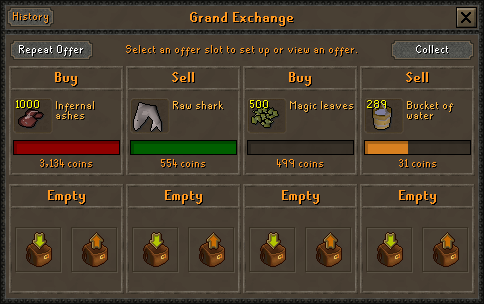
Grand Exchange main interface, showing active buy and sell offers.
The Grand Exchange is located northwest of Varrock. Players place offers for tradeable items at a chosen quantity and price, and the game automatically matches compatible orders. You can collect completed purchases, coins, or partially completed trades through the exchange or supported bank collection options.
- Offer slots: Free-to-play players have three active offers, while members can use eight.
- Buying limits: Most items have a maximum quantity that one account can purchase within a rolling four-hour window. Limits differ between items and may be shared by related variants.
- Guide prices: The displayed market price is a reference calculated from previous trades. The amount needed to complete an order immediately may be different.
- Tradeable items: Most equipment and supplies can be listed, although some items and new accounts face restrictions.
Grand Exchange prices are driven by supply and demand. Prices generally rise when more players want an item than are willing to sell it, and fall when supply outpaces demand. Updates, new bosses, seasonal activities, and skilling trends can shift either side of that balance.
Gaining Grand Exchange Knowledge
Before trading an unfamiliar item, check its price history and how frequently it changes hands. Reading charts can help you understand recent price movements and is particularly useful when considering longer-term investments.
Start with an item you understand. Consumables such as runes, ammunition, food, potions, and common skilling materials are traded regularly. Expensive equipment can have wider margins, but may require much more Gold and take longer to resell. A large price increase alone does not make an item a good investment.
Reading a Price Chart
Price charts can help traders compare short-term movement with the wider market trend.
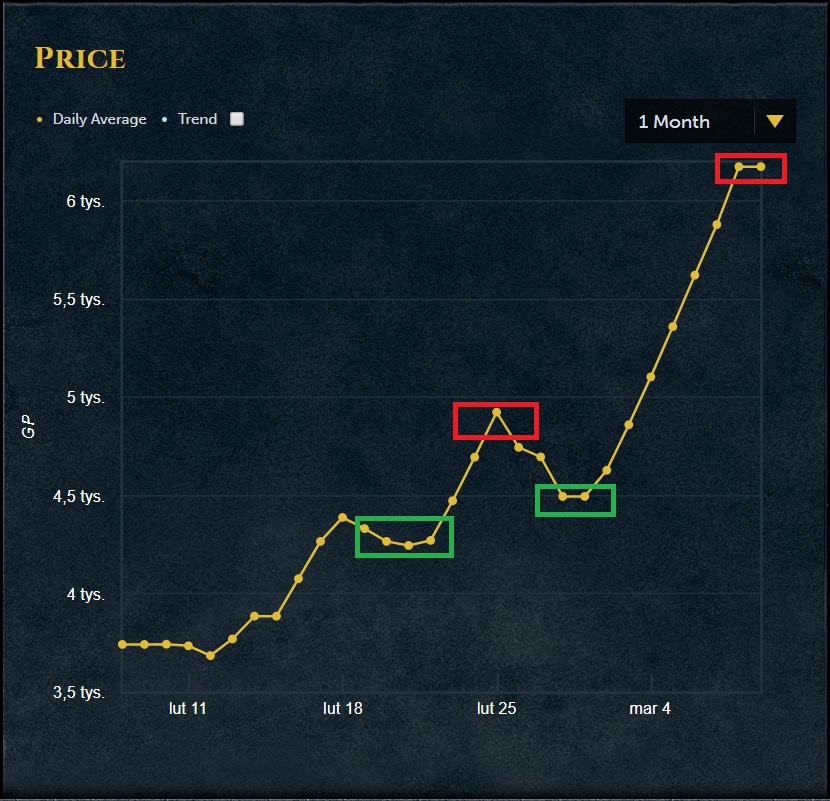
Graph 1. A monthly price chart with potential buying and selling zones marked.
The green and red boxes help explain one possible trading approach: watching for a price to settle after a decline, then selling into a later rise. However, a dip can continue falling and a high can climb higher. Use the pattern as a prompt for further research.
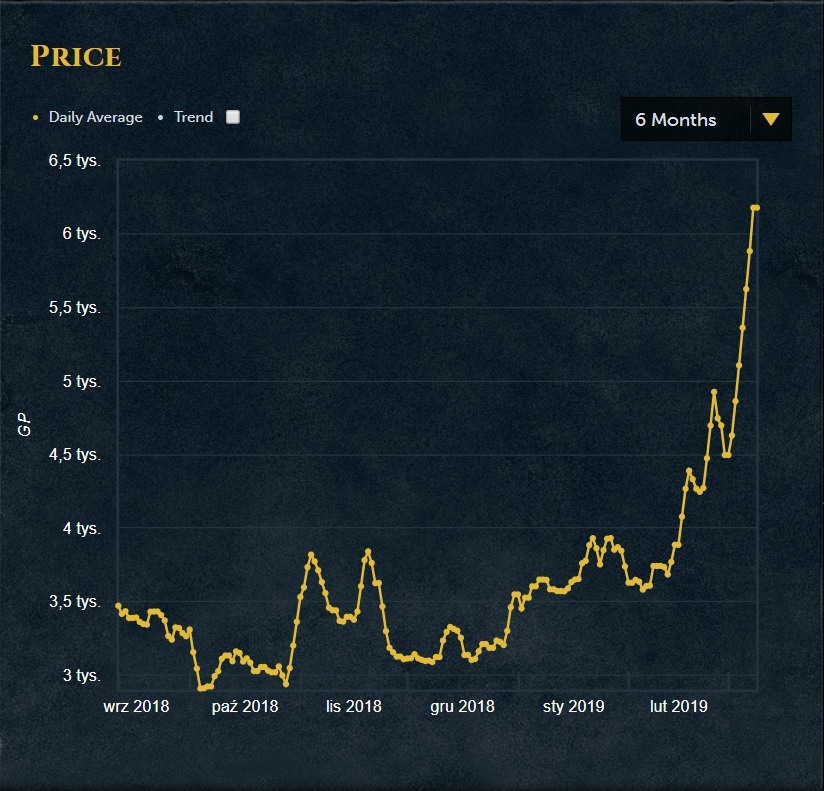
Graph 2. A six-month price chart showing how the wider trend can change the interpretation of short-term movements.
The six-month view shows that the sharp rise came after a long period of lower prices and repeated fluctuations. That context matters. If an item has already reached its highest price in months, buying because the chart looks strong may leave you exposed to a reversal. Comparing multiple time ranges is especially useful for investments held over several days or weeks.
Useful Sources of Market Information
- Recent trade prices and volume: OSRS live price trackers can help estimate the spread between immediately executed buy and sell orders. The Grand Exchange database and in-game price tools provide broader context.
- Patch notes: Changes to combat, skilling, drop tables, or item requirements can affect demand very quickly. Read the actual changes before buying an item based on speculation.
- Player discussions: Forums and trading communities can reveal why an item is moving, but claims about an imminent buyout or guaranteed profit should be treated cautiously.
High trading volume is not something you should just avoid automatically. Common supplies often have narrow spreads, but their steady demand can make them easier to trade. Rare equipment offers a different balance: potentially more Gold per item, with slower transactions and greater risk.
Grand Exchange Investing
Investing involves purchasing items that you expect to become more valuable, holding them while the market develops, and selling when the potential return justifies closing the position. This might take days or weeks, with no certainty that the expected price increase will happen.
Materials, seeds, potions, and other frequently used supplies can be worth watching when upcoming content increases demand. In RuneScape 3, Summoning ingredients and pouches may also be relevant, while OSRS has its own supply chains and popular bossing consumables. The best choice depends on the update and its effect on the actual market.
Look for a Reason Behind the Movement
An incoming skill update may increase demand for a crafting material, but it could also introduce a new source that makes the item easier to obtain. Always check both possible effects. Buying immediately after an announcement can be risky if the expected increase is already reflected in the price.
Check the Longer Trend and Plan an Exit
Review the one-month and three- or six-month charts, trading volume, and current offer prices. Decide in advance roughly where you would take a profit or stop holding the item if the market moves against you. Keeping most of your cash stack in one investment limits your flexibility.
Grand Exchange Flipping
Flipping is the shorter-term approach: buy an item from players selling at the lower side of the market, then list it at a higher price for players who want to buy quickly. You are trying to capture the difference between the two prices, known as the spread or margin.
High-Volume and Low-Volume Flipping
| Type | Common Examples | What to Expect |
|---|---|---|
| High-volume | Runes, food, ammunition, potions, ores | Faster turnover and tighter margins; easier to test with smaller amounts of Gold |
| Lower-volume | Expensive weapons, armour, rare equipment | Potentially larger profits per item, but slower trades and more capital at risk |
For both types, consider the margin after tax, the four-hour buy limit, and how long orders usually take to complete. The widest displayed margin is not necessarily the best flip.
Checking and Trading a Margin
- Find an item: Use recent executed prices, volume, and the current buy limit to estimate a reasonable margin. OSRS trackers commonly display the last recorded instant-buy and instant-sell prices.
- Buy near the lower side: Place a small offer near the price recently received by instant sellers. Wait for the order to fill instead of overpaying just to complete it immediately.
- Resell near the higher side: Once the purchase is complete, list it closer to the price paid by instant buyers. Slight price adjustments may speed up a sale, but excessive undercutting removes your profit.
- Check the result: Record the buy cost, sale proceeds after tax, and time spent waiting. Increase your trade size only once the item proves reliable.
One way to check a margin manually is to instantly buy a single item and then instantly sell one to compare the two execution prices. This still works as a rough test, but it can lose Gold on the test trades, and the market may move before you complete a full flip. For expensive items, recent price data is generally a safer starting point.
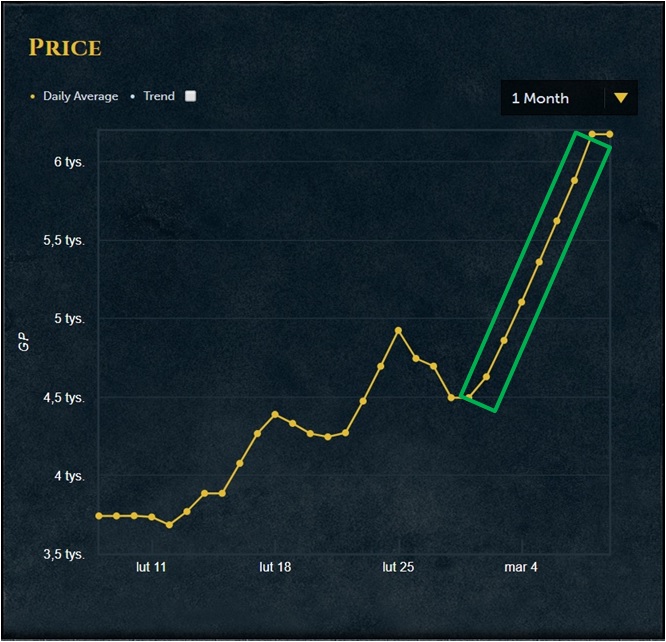
Graph 3. An example of upward price movement that can create opportunities for short-term trading.
In an upward market, both sides of the trading spread may move before your orders fill. The same can happen during a sharp fall. The most consistent approach is to reassess actual transaction prices and keep the amount of Gold exposed to one item manageable.
Grand Exchange Tax and Real Profit
Both Old School RuneScape and RuneScape 3 charge a 2% tax on most Grand Exchange sales. The amount is calculated per item and rounded down. Items sold for less than 50 GP effectively incur no tax, and there are exemptions, including Bonds. In OSRS, the tax is capped at 5 million GP per item.
Example: flipping a single item
Buy price: 10,000 GP
Sell price: 10,400 GP
Gross margin: 400 GP
2% sales tax: 208 GP
Net profit: 192 GP per item
Calculate your return using selling price - buying price - sale tax. A nominal spread of 400 GP is worth less than half that amount in the example above. For bulk trading, also check whether you can purchase and resell enough units for the total profit to justify occupying an offer slot.
Recent Grand Exchange Changes
OSRS - Beyond Max Cash (September 30, 2026): Grand Exchange offers can now exceed the old 2,147,483,647 GP limit through a combination of Coins and Platinum tokens, making very expensive items easier to trade through the exchange. Individual item-stack limits remain unchanged, as do the normal buy restrictions and the 5-million-GP-per-item tax cap. Guide prices can also react more quickly to completed trades.
RuneScape 3 - GE Price Improvements (July 2026): Market prices were made more responsive, and the interface gained clearer information about recent trading prices and buy limits. These tools are useful when an old guide price is far from what buyers and sellers are actually paying.
These changes improve trading convenience and price visibility, but they do not remove the need to check live margins or understand the items you are buying.
Final Thoughts
Successful Grand Exchange trading comes down to knowing the market and recognizing when an item is worth buying. Watch supply and demand, study price trends, and separate short-term flipping from longer-term investing. Today's trading tools make that research much easier.
Start with a few familiar items, track what your trades actually earn, and resist the urge to chase every sudden price spike. A manageable strategy is easier to repeat and less likely to tie up all your Gold in a poorly timed purchase.
RuneScape and Old School RuneScape are trademarks and intellectual property of Jagex Ltd.